
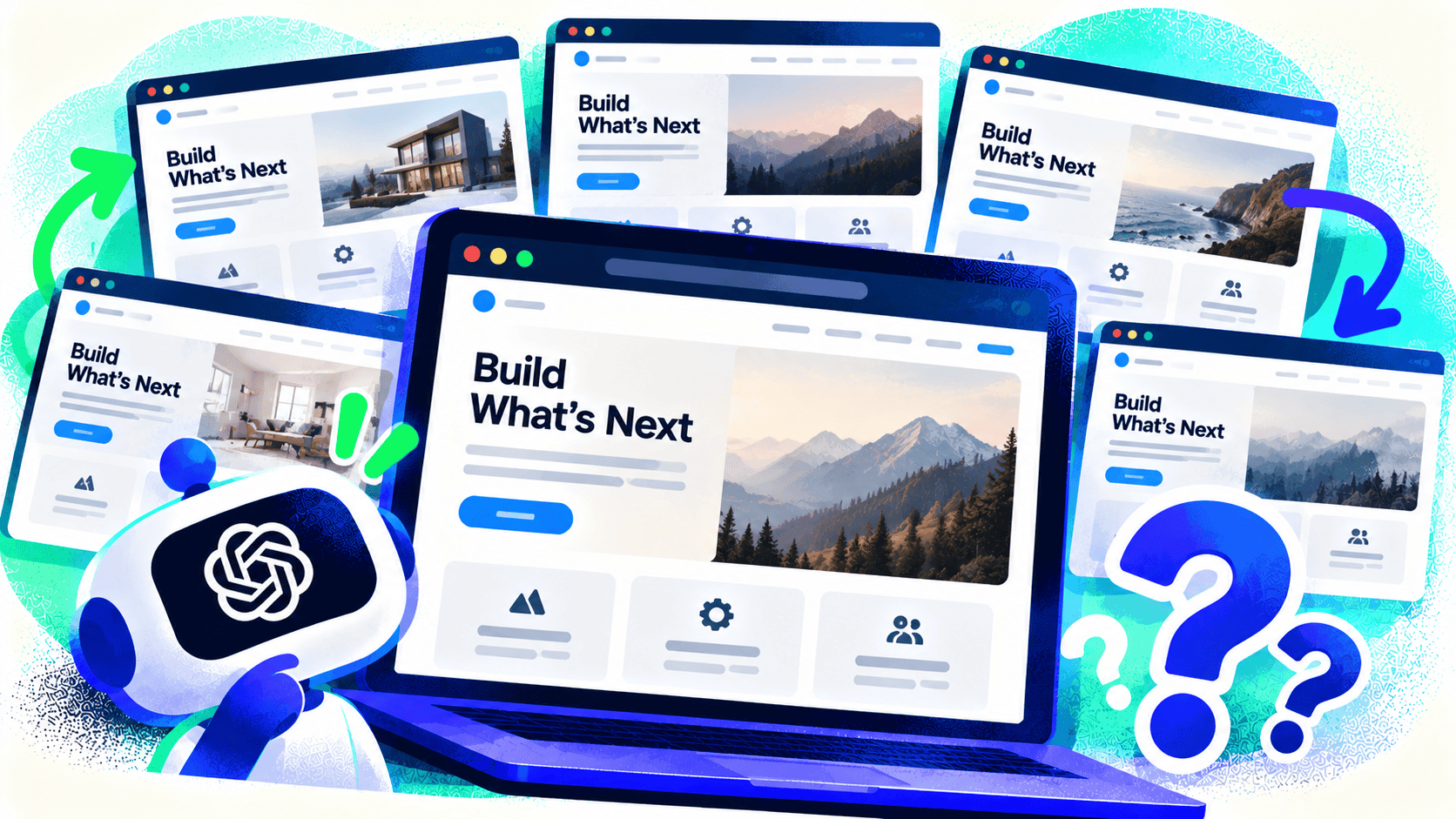
Open a dozen business websites and you may see the same oversized headline, gradient background, three feature cards, and generic photo of people in a meeting. AI site builders can produce that pattern quickly, but they are not the only reason it exists. Templates, familiar design trends, and rushed briefs also push sites toward the same default choices.
The problem is not that a layout looks familiar. The problem is that the site gives visitors no clear reason to choose the business behind it. If your services, proof, buying process, and personality could be swapped with a competitor’s name, the website has not done its job.
Why AI-generated sites often start with familiar patterns
An AI builder needs a prompt and a set of available components. Ask it for a “modern, professional website” without much more direction and it will usually reach for common patterns that fit many businesses. That can be useful for a first sketch. It doesn’t reveal what your customers misunderstand, what your sales team explains repeatedly, or how your operations actually work.
The same limitation applies to copy. “Innovative solutions” and “customer-first service” sound plausible, but neither tells a buyer what you do, who you serve, or what makes the experience different. Faster production only helps when the team knows what the site needs to say and do.
What a custom website should solve
A useful discovery process starts with questions: Why do customers contact you? What keeps qualified prospects from booking? Which products need explanation? What information must move between the site and your other systems? The answers shape the page structure, copy, design, and technical build.
Distinctive design doesn’t mean adding effects for their own sake. It can mean product photography that shows the real offer, a comparison that clarifies choices, a quote request tailored to how the business sells, or navigation organized around the customer’s task. Accessibility, mobile speed, and clear calls to action matter as much as visual identity.
For stores and service businesses, the work often goes beyond the front end. A beautiful page can’t compensate for a broken booking path, inaccurate stock, or a form that never reaches the right team. Kelp approaches ecommerce as a connected system, including the integrations behind the storefront.
AI can help without making the decisions
AI can help a team explore layouts, summarize research, draft alternatives, and speed up routine production. A designer and developer still need to test those ideas against the brand, the customers, and the actual business process. The most useful question is not “Was AI used?” It is “Does this site help the right person understand and act?”
Look at Kelp’s US Labels project for an example. The project needed a refreshed storefront, a custom label designer, and a connection to printing software. A generic template could show products, but the buying and production workflow required a more specific solution.
How to tell whether your site is too generic
Read the homepage without the logo. Can you tell what company it belongs to? Ask someone unfamiliar with your business to find the right service or product and explain what happens next. Then compare your site with three competitors. If the wording, imagery, and page structure feel interchangeable, start with your message and customer journey before choosing a new visual style.
A distinct look also needs a working path to action. Kelp’s free Website Checker can flag conversion opportunities, broken links, and site health issues; use its report alongside the brand and customer-journey questions above.
A website should make your business easier to recognize, understand, and work with. If yours feels like it could belong to anyone, talk with Kelp about a site built around your business.
Leave a Comment