
Answer engine optimization, often shortened to AEO, describes the work of making your business useful and understandable when people ask questions in AI search experiences. It is a useful way to frame a goal, but it is not a separate set of magic tags. Google says its AI search features still rely on its core search systems, and its guidance for generative search puts unique content and a clear technical structure first.
For a business website, the practical question is simple: can a person or search system quickly tell what you do, who you help, where you operate, and why your answer is credible?
Make your important pages accessible
Check that your service, product, location, and case study pages can be crawled and indexed. Review robots.txt, accidental noindex settings, broken links, duplicate pages, and content that only appears after complicated interactions. Use Google Search Console to see whether the pages you care about are indexed and receiving relevant search impressions.
If you want eligible pages considered for ChatGPT search, OpenAI says to allow its OAI-SearchBot and make sure your hosting or security setup doesn’t block it. Being crawlable doesn’t guarantee a citation, but a blocked page is a poor starting point.
Answer the questions your buyers actually ask
Write the answer near the top of the page, then provide the details a buyer needs to act. An ecommerce agency page might address what a Shopify redesign includes, when a merchant needs a custom integration, and how the project affects an existing store. A local service page should explain the service, service area, process, and next step without making people decode agency language.
Use descriptive headings and plain language. A paragraph that explains a decision is more helpful than a page built from repeated keyword variations. Google explicitly warns against producing many pages mainly to cover every possible search phrasing in its AI search guidance.
Add evidence only your business can provide
Many sites can publish a generic definition. Fewer can show a real project, explain the constraints, and describe the result. Add case studies, original images, examples, process details, and first-hand answers from the people doing the work. When you have permission and reliable data, include the outcome and how it was measured.
Keep claims precise. “We improved checkout conversion by 18% over the prior quarter” is useful only if you can support the measurement and explain the comparison. If you can’t, describe what changed without inventing a result. Originality makes a page more useful to customers and gives search systems something specific to reference.
Keep business details consistent
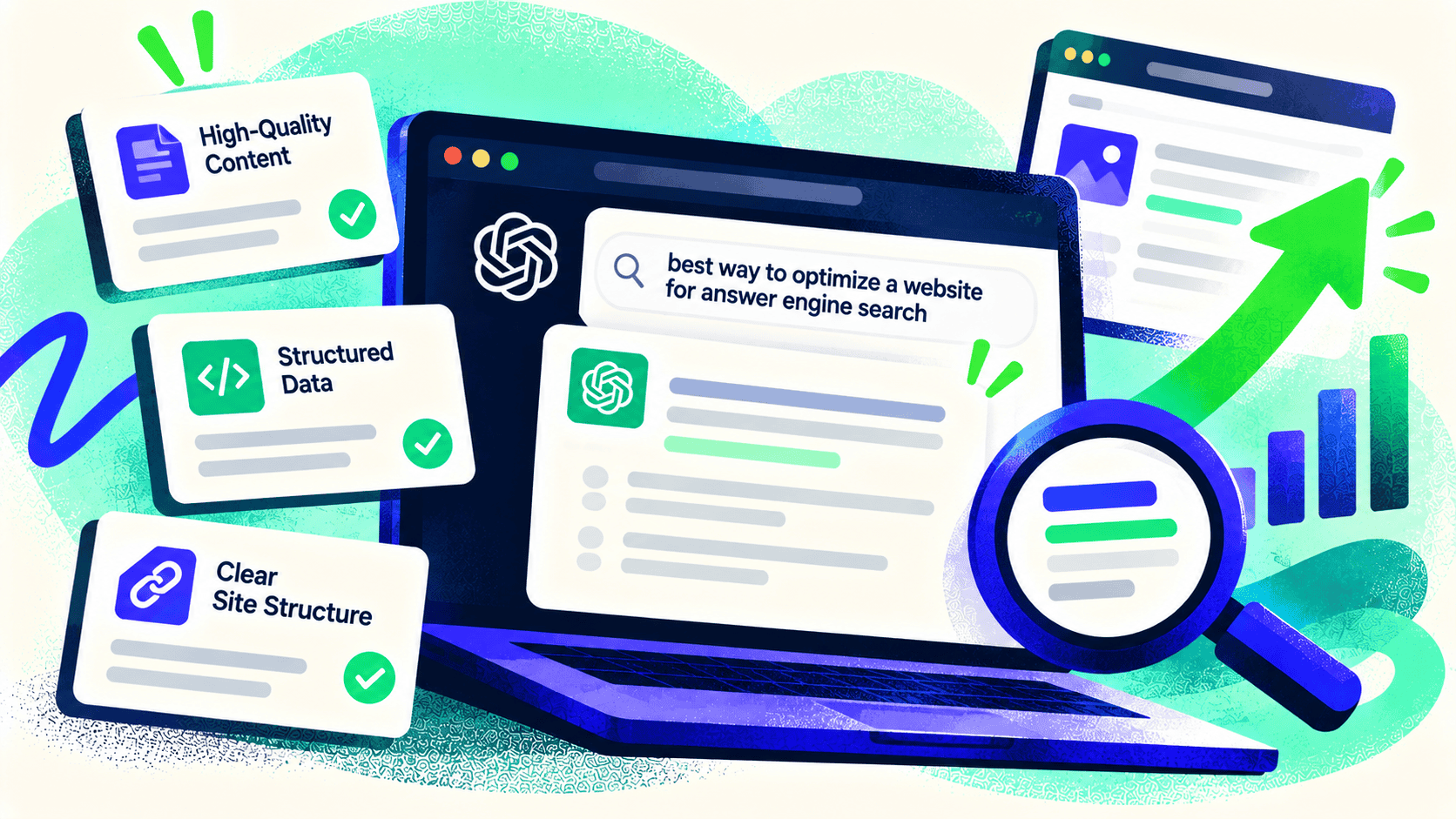
Make the company name, services, location, and contact information clear on your site and in relevant business profiles. Connect related pages with descriptive links: a service page can point to a case study, while a case study can point back to the service it demonstrates. Use structured data where it accurately describes visible content and follows the search platform’s rules. Markup can clarify information; it can’t make a weak page authoritative by itself.
Avoid publishing hundreds of near-identical city or service pages. If a page claims local expertise, give it real local information and proof that helps a visitor choose. Google’s content guidance warns that creating many pages without added value may violate its scaled-content policy.
Measure useful visibility
Track more than whether an AI tool mentioned your name once. Watch relevant queries and landing pages in Search Console, organic leads, and referrals from AI search tools in your analytics. OpenAI says ChatGPT search referral URLs include utm_source=chatgpt.com, which can help identify that traffic when it reaches your site. Also review whether visitors from those pages actually contact you or buy.
For an initial snapshot, Kelp’s free Website Checker reviews AI search readiness, technical SEO, and schema in one report. Use the findings to choose the pages and fixes that deserve a closer look.
AI Search Optimization should improve the underlying website: clear answers, accessible pages, credible evidence, and a useful path to action. For a closer look at ChatGPT specifically, read our ChatGPT search visibility guide. If your site needs structural work, Kelp’s website team can help make important pages easier to find and use.

Leave a Comment