
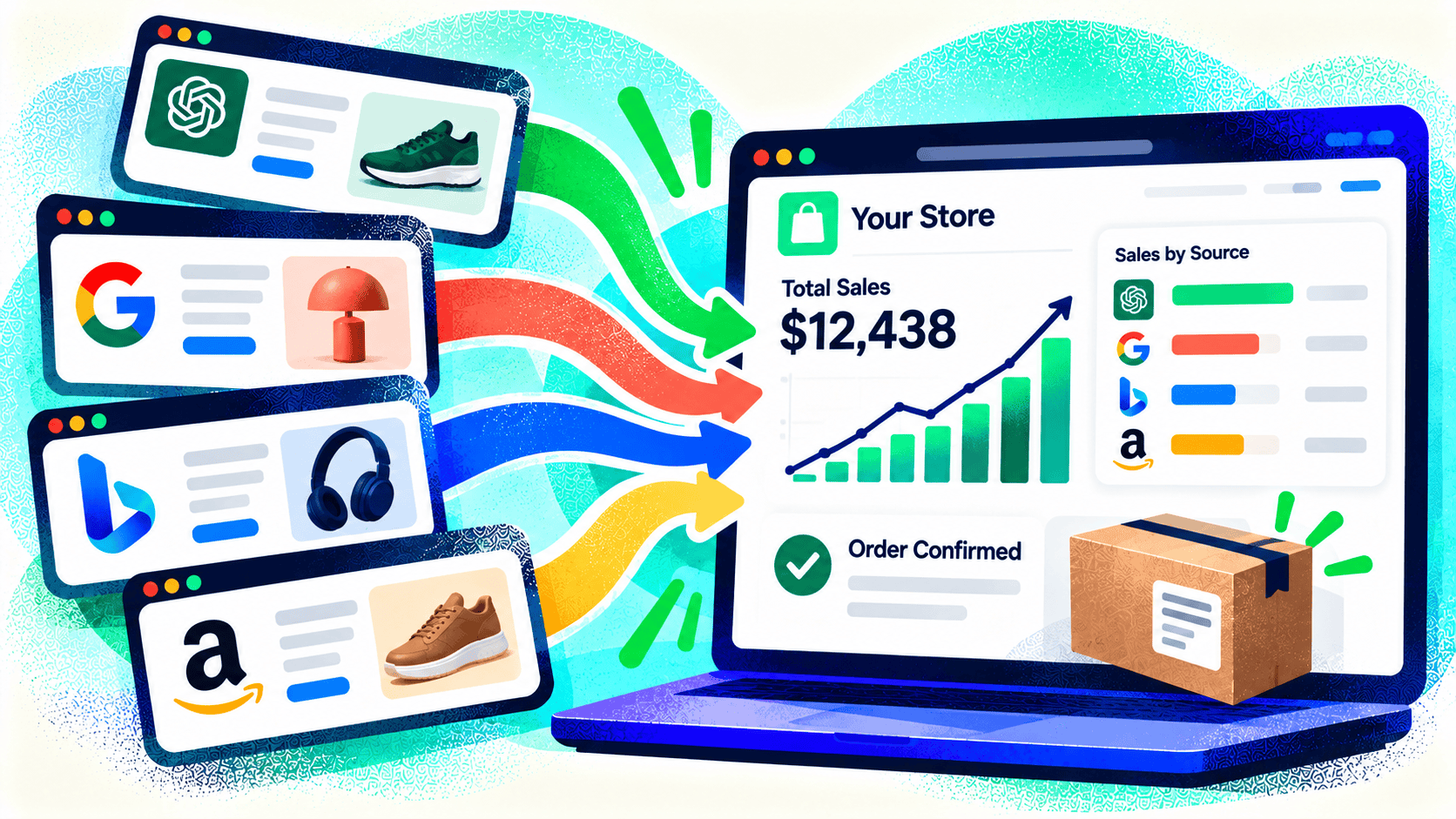
AI tools can help shoppers discover and compare products without starting at a store homepage. That changes where the buying journey starts. It doesn’t remove the need for a reliable ecommerce system, a trustworthy brand, or accurate product and fulfillment information.
For Shopify merchants, agentic storefronts can make eligible products available in AI shopping channels. Shopify says ChatGPT shoppers complete purchases through the merchant’s online store checkout, while eligible merchants can use direct checkout in some other channels. Either path still depends on the merchant’s catalog, inventory, policies, order handling, and customer support.
Discovery can move away from the homepage
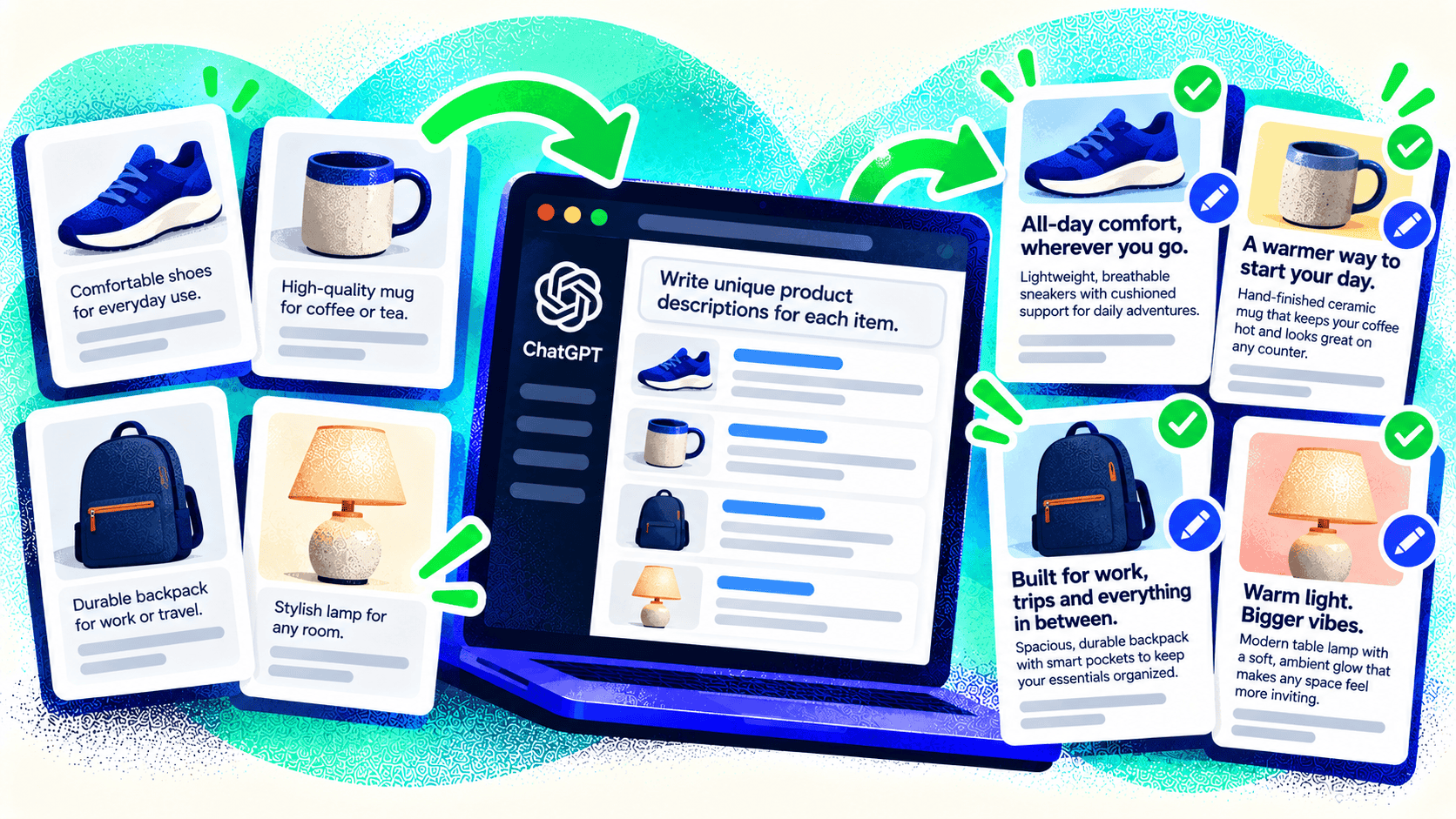
A shopper might ask an AI assistant for a product that fits a particular size, budget, and use. The assistant may show several products before the shopper has seen any merchant site. That makes complete, current product data more important. A vague title or outdated inventory count can make the product a poor match or create a disappointing visit.
This doesn’t mean every merchant needs to redesign for a hypothetical future. Start by checking the channels available to your business, the quality of your product data, and the buying experience people already have.
Your site still does important work
Customers may visit the product page to inspect photos, compare variants, read policies, and decide whether they trust the seller. For customized or technical products, the site may contain a configurator, size guide, compatibility tool, or other experience an AI summary can’t replace. Shopify’s ChatGPT buying path currently returns shoppers to the merchant’s checkout, making that experience directly relevant.
Behind the scenes, orders still need to reach the correct warehouse or production system. Returns and support still need owners. A broken inventory connection can harm an AI-sourced sale as easily as a search-sourced sale.
Make the store useful across channels
Treat the storefront as the source of a clear, accurate buying experience. Keep product attributes structured, pages readable, policies current, and checkout easy on mobile. Measure traffic and sales by channel, but also review the whole path after a recommendation. A visitor who arrives with a precise question may need a precise answer on the product page.
For stores with complex products, invest in the information and tools that make buying possible. A tailored configurator or accurate B2B catalog can be a stronger advantage than a generic AI-themed feature.
Through AI Ecommerce, Kelp builds custom Shopify storefronts and connects them to the systems that fulfill the order. If AI shopping is changing how customers find you, talk with us about the store and data experience those customers reach.

Leave a Comment